The Anime You Watch Has Been Teaching You Japanese Numbers This Whole Time
Every time you called Minato "the Yondaime" you said four. Every time someone referenced the Sannin you said three. Every time you talked about the Yonko era in One Piece you said four again. You didn't notice because you were watching anime - but your brain absorbed a fully functional Japanese number system anyway.
Here's the thing: Japanese counting isn't a random list of syllables to memorize. It's a system, and anime is basically a free textbook for it. Once you see the logic, every faction name, every title, every group count in every series you've ever watched clicks into place.
This is that click.
Key Takeaways
- Japanese has two counting systems: Sino-Japanese (ichi, ni, san) and native Japanese (hitotsu, futatsu, mittsu) - anime uses both
- The Hokage titles teach the 代目 (daime) counter - used for any succession of titles or generations, from ninja villages to yakuza bosses
- Sannin (三人) uses the 人 (nin) people counter - the same word that means "three people" in everyday Japanese
- One Piece's faction names are a walking numbers lesson: Yonko (四皇, four emperors), Gorosei (五老星, five elders), Shichibukai (七武海, seven warlords)
- Nanatsu no Taizai (七つの大罪) uses the native Japanese reading nanatsu for a specific archaic register
- Shichi-Go-San (七五三) is a real Japanese holiday literally named after the numbers 7, 5, and 3 - proving these numbers are embedded deep in Japanese culture, not just anime
Two Systems, One Counting Brain
Before you can decode the anime, you need to know the split. Japanese has two ways to count the same numbers.
The Sino-Japanese system came from classical Chinese and is used in almost every formal compound word in modern Japanese: ichi, ni, san, shi, go, roku, shichi, hachi, ku, juu. When Naruto characters get their Kage titles, when One Piece names its factions, when Demon Slayer numbers its demons - they're all using Sino-Japanese readings.
The native Japanese system is older and has a completely different sound: hitotsu, futatsu, mittsu, yottsu, itsutsu, muttsu, nanatsu, yattsu, kokonotsu, too. These show up in phrases like 七つの大罪 (nanatsu no taizai, Seven Deadly Sins) - the -tsu ending is the giveaway. Once counting passes ten, the native system mostly stops being used and Sino-Japanese takes over.
Both systems use the exact same kanji. 七 can be read shichi (Sino-Japanese) or nana / nanatsu (native Japanese). Context and register determine which reading applies. Anime uses both, often in the same series.
代目 (Daime) - The Hokage Counter
The Hokage titles are a masterclass in a single counter: 代目 (daime).
代 (dai) means "generation" or "era of succession." 目 (me) is an ordinal suffix that turns any number into "nth" - the same way -th works in English. Put them together: 代目 means "nth holder of a position" or "nth in a line of succession." The full Hokage sequence:
- 初代 (shodai) - First. 初 (sho) is a special word meaning "the original" or "the founding one."
- 二代目 (nidaime) - Second. 二 (ni) = 2.
- 三代目 (sandaime) - Third. 三 (san) = 3.
- 四代目 (yondaime) - Fourth. 四 (yon) = 4.
- 五代目 (godaime) - Fifth. 五 (go) = 5.
- 六代目 (rokudaime) - Sixth. 六 (roku) = 6.
- 七代目 (nanadaime) - Seventh. 七 (nana) = 7.
If Naruto ever produced an eighth Hokage it would be 八代目 (hachidaime), a ninth would be 九代目 (kyūdaime), a tenth would be 十代目 (jūdaime). The pattern just keeps going.
Okay but here's what makes this actually useful: 代目 works for any succession in Japan, not just ninja villages. Yakuza bosses use it. Company presidents use it. Traditional tea ceremony masters use it. Sumo champions use it. When a Japanese crime drama says 三代目組長 (sandaime kumichō), that is "the third-generation gang boss." The exact same word. Kishimoto didn't invent this counter - he just gave you a very sticky way to memorize it.
Every Kage across the Five Great Villages uses the same system. Once you know 三代目 = third, you know the Third Mizukage, Third Raikage, Third of anything.
人 (Nin) - Counting People
The counter for people is 人, and it has two irregular readings you need to memorize before the pattern clicks.
One person: 一人 (hitori). Two people: 二人 (futari). These two are completely irregular - they come from the native Japanese system. From three onward, everything regularizes: 三人 (sannin), 四人 (yonin), 五人 (gonin), 六人 (rokunin), 七人 (shichinin)...
Sannin (三人衆) is literally just "three people." Jiraiya, Tsunade, Orochimaru - the legendary trio. The title isn't a special word invented for the Naruto universe; it's the everyday Japanese word for a group of three people. The reason it sounds cool is the same reason everything sounds cool when you don't know what it means yet.
This counter appears constantly across anime. 七人の侍 (Shichinin no Samurai) - Akira Kurosawa's Seven Samurai - is literally "seven people's samurai." Seven people. 七人. The same counter Kishimoto used for his three legendary ninja, Kurosawa used for his seven warriors in 1954.
Once you know the pattern - hitori (1 person), futari (2 people), then sannin, yonin, gonin, rokunin, shichinin from three onward - you can parse any group count in any anime.
One Piece Is a Walking Numbers Lesson
Eiichiro Oda loves building factions, and almost every faction name encodes a number. By the time you've watched One Piece for a few years, you've passively absorbed most of the numbers 1 through 9.
四皇 (Yonkō) - 四 (yon) = 4. 皇 (kō) = emperor. The four most powerful pirates. The number is literally the first kanji.
五老星 (Gorosei) - 五 (go) = 5. 老 (rō) = elder. 星 (sei) = star. Five Elder Stars at the top of the World Government.
七武海 (Shichibukai) - 七 (shichi) = 7. 武 (bu) = martial or military. 海 (kai) = sea. Seven Warlords of the Sea.
三大将 (Sandaishōgun) - 三 (san) = 3. 大将 (taishō) = admiral or general. The Three Admirals. Akainu, Aokiji, Kizaru.
九蛇 (Kuja) - 九 (ku) = 9. 蛇 (ja) = snake. The Kuja Pirates of Amazon Lily. Nine snakes, right there in the name.
Decode the first kanji in any One Piece faction name and you will almost always find a number. Oda didn't hide them - he put them upfront and trusted his audience to either know or eventually learn.
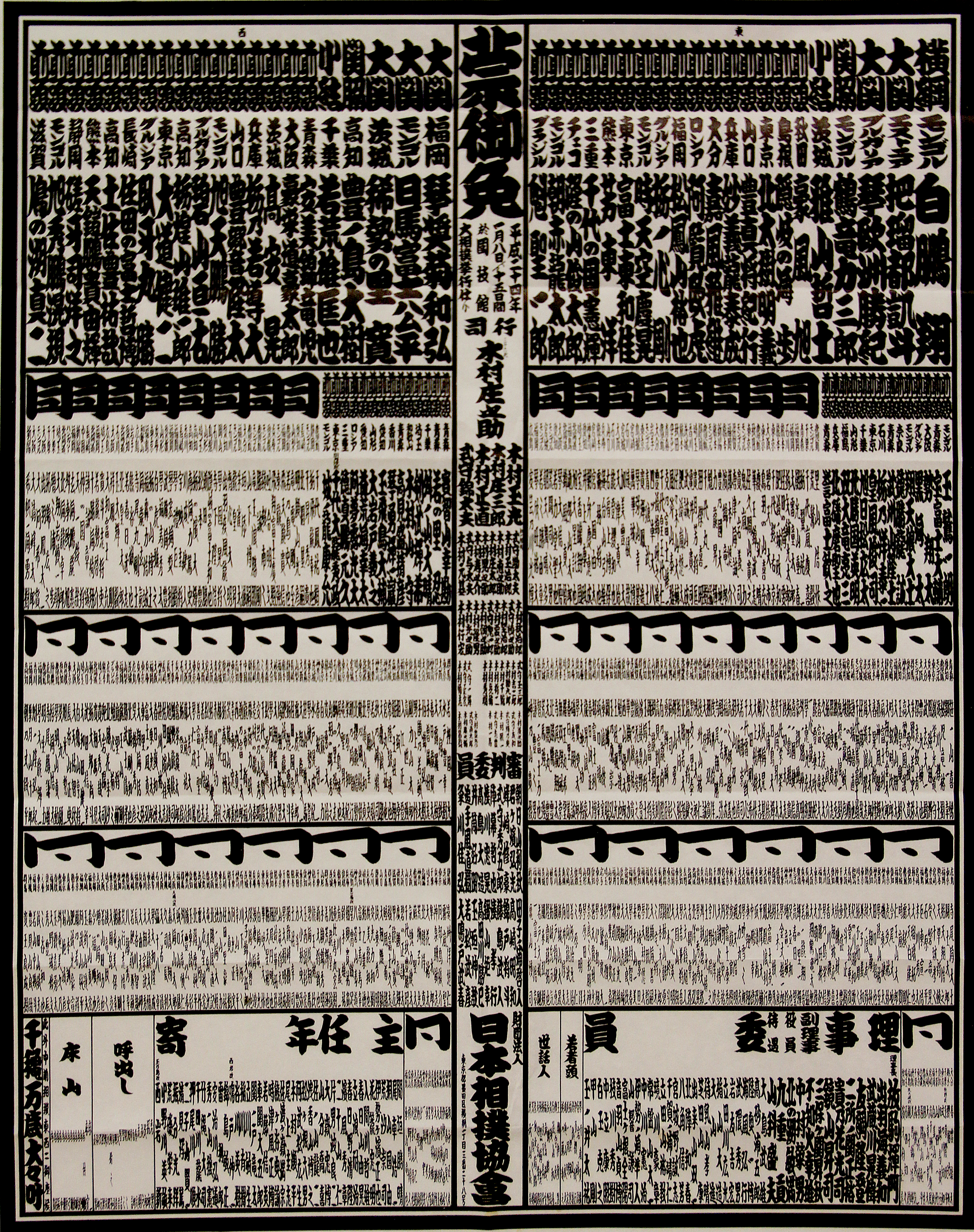
The traditional sumo ranking list above - called a banzuke (番付) - is the same culture that produces anime's numbered hierarchies. 番 (ban) means number or ranking, 付 (zuke) means attached. A ranking with numbers attached. Sound familiar? Demon Slayer's Upper Rank One, Two, Three are built on this exact same idea.
七つ (Nanatsu) - When the Count Goes Native
Not every anime uses Sino-Japanese numbers. 七つの大罪 (Nanatsu no Taizai) - The Seven Deadly Sins - uses 七つ (nanatsu), the native Japanese reading of 7.
Why the choice? Register. 七つ sounds older, heavier, more archaic than shichi or plain nana. For a fantasy series built around medieval European sin theology mapped onto magical knights, the native Japanese reading adds a layer of formality and age to the title. It's the same authorial choice as writing "thou dost" instead of "you do" - technically the same meaning, completely different feel.
The full native counting sequence: 一つ (hitotsu), 二つ (futatsu), 三つ (mittsu), 四つ (yottsu), 五つ (itsutsu), 六つ (muttsu), 七つ (nanatsu), 八つ (yattsu), 九つ (kokonotsu), 十 (too). Notice it stops at ten without the -tsu suffix. That's just how the native system works.
The -tsu ending is your flag that an author is reaching for native Japanese counting rather than Sino-Japanese. When you see it, you're looking at a deliberate stylistic choice.
十二 (Juuni) - When the Numbers Get Bigger
十二鬼月 (Jūnikizuki) - Demon Slayer's Twelve Kizuki, the top twelve demons under Muzan Kibutsuji.
十二 (jūni) is where two-digit Sino-Japanese numbers become legible. 十 (jū) = 10. 二 (ni) = 2. Ten plus two equals twelve. Every Japanese number above ten works this exact way:
- 十三 (jūsan) = 13
- 十五 (jūgo) = 15
- 二十 (nijū) = 20 (two tens)
- 二十一 (nijūichi) = 21
This additive pattern is the whole system. Once you internalize it, reading any Japanese number is mechanical. Demon Slayer gave you 十二 as a vocabulary item you already know. Every time you read jūnikizuki, your brain is processing 10 + 2 = 12 without even registering it as math.
The Kizuki are split into 上弦 (jōgen, upper ranks) and 下弦 (kagen, lower ranks), six each. The individual demons are titled 上弦の一 (jōgen no ichi) - Upper Rank One. That 一 (ichi) at the end is just the number 1. Kokushibo, the most powerful demon alive, has "number 1" as part of his official title. Straight Sino-Japanese counting.
七五三 (Shichi-Go-San) - These Numbers Run Japan
The deepest proof that these numbers matter isn't in anime at all.
七五三 (Shichi-Go-San) is a traditional Japanese celebration held every November 15th. Families bring children who are turning 7, 5, or 3 years old to a Shinto shrine for blessings and prayers. The three ages are considered spiritually significant - odd numbers have long been associated with positive energy in Japanese culture, a belief inherited from Chinese cosmology.
The name of the holiday is literally the numbers 七 (7), 五 (5), 三 (3) written together. No other words. Just the numbers.
Those are the exact same numbers that appear in Shichibukai (七), Gorosei (五), and Sannin (三). The same Sino-Japanese number system that powers anime faction names is the one that names a holiday millions of Japanese families celebrate every autumn.
Oda grew up dressing up for Shichi-Go-San. Kishimoto grew up dressing up for Shichi-Go-San. These numbers aren't anime worldbuilding quirks - they're embedded in the culture from childhood.

Vocabulary Callout
The base numbers - Sino-Japanese system:
| Kanji | Romaji | Meaning | Seen in anime as... |
|---|---|---|---|
| 一 | ichi | 1 | 一番 ichiban (number one/best) |
| 二 | ni | 2 | 二代目 nidaime (2nd Hokage) |
| 三 | san | 3 | 三人 sannin (three people), 三代目 sandaime |
| 四 | yon / shi | 4 | 四皇 Yonko (Four Emperors) |
| 五 | go | 5 | 五老星 Gorosei, 五影 Gokage |
| 六 | roku | 6 | 六代目 rokudaime (6th Hokage) |
| 七 | shichi / nana | 7 | 七武海 Shichibukai, 七代目 nanadaime |
| 八 | hachi | 8 | 八代目 hachidaime (8th - hypothetical) |
| 九 | ku / kyu | 9 | 九蛇 Kuja, 九つの巨人 (Nine Titans) |
| 十 | juu | 10 | 十二鬼月 Junikizuki (12 Kizuki) |
Key counters:
| Kanji | Reading | What it counts | Example |
|---|---|---|---|
| 代目 | -daime | Generations / title holders | 七代目 nanadaime (7th Hokage) |
| 人 | -nin / -ri | People | 三人 sannin (three people) |
| 皇 | -ko | Emperors | 四皇 Yonko (four emperors) |
| つ | -tsu | Things (native system) | 七つ nanatsu (seven things) |
Why This Matters for Your Japanese
Numbers are not optional vocabulary. They're in every address, every price, every floor, every ranking, every time reference in the entire language. The difference between Japanese learners who feel overwhelmed and those who feel fluent is often just whether the number system has clicked.
Anime accelerated that click for you. Sandaime isn't just "the word for the Third Hokage" - it's san (3) + dai (generation) + me (ordinal suffix). Break down any of these faction names and you get free vocabulary items, not proper nouns. That's the real gift.
The same logic runs through the songs in the KitsuBeat song library. 一番 (ichiban, number one) shows up in almost every battle anthem. 二人で (futari de, the two of us) anchors every duet and romance arc. 七転八起 (nana korobi ya oki, fall seven times get up eight) is a proverb you'll hear in motivational tracks and training montages. Once the counting system clicks, you stop treating these as random sounds and start hearing the actual meaning.
For more on how anime builds on Japanese culture and language, check the other deep dives in the KitsuBeat Journal - including the mythology behind the Uchiha's jutsu names and the real history encoded in One Piece's Wano arc.
FAQ
What does sandaime mean in Naruto?
三代目 (sandaime) means "the third-generation holder" of the Hokage title. 三 (san) = 3, 代 (dai) = generation or succession, 目 (me) = ordinal suffix. The Third Hokage, Hiruzen Sarutobi, carries this title. The same counter system applies to all Kage titles across the Five Great Villages.
What does sannin mean in Japanese?
三人 (sannin) literally means "three people." 三 (san) = 3, 人 (nin) = person or people counter. The legendary Sannin - Jiraiya, Tsunade, and Orochimaru - are simply the three people at the apex of Konoha's shinobi. The same counter gives you 二人 (futari, two people) and 四人 (yonin, four people).
What does Yonko mean in One Piece?
四皇 (Yonko) means "Four Emperors." 四 (yon) = 4, 皇 (ko) = emperor. The four most powerful pirates in the New World. The number is the first kanji - if you know yon equals 4, the name tells you exactly how many there are.
What does nanadaime mean in Naruto?
七代目 (nanadaime) means "the seventh-generation Hokage." 七 (nana) = 7, 代目 (daime) = nth-generation holder of a title. Naruto Uzumaki is the Nanadaime Hokage. The same counter works for any succession in Japan: company presidents, yakuza bosses, sumo champions.
Why does Nanatsu no Taizai use nanatsu instead of shichi for seven?
七つ (nanatsu) is the native Japanese reading of 7, from the older counting system (hitotsu, futatsu, mittsu...). 七 (shichi) is the Sino-Japanese reading. The series uses nanatsu to give the title a heavier, more archaic feel - appropriate for a fantasy series built around medieval sin theology. Both mean 7; the choice of reading sets the register.
Is Shichi-Go-San a real Japanese holiday involving the numbers 7, 5, and 3?
Yes. 七五三 (Shichi-Go-San) is a traditional Japanese celebration held each November 15th. Families bring children turning 7, 5, or 3 to Shinto shrines for blessings. The holiday name is literally the numbers 7 (七), 5 (五), and 3 (三) written together - the same three numbers encoded in One Piece's Shichibukai, Gorosei, and Naruto's Sannin.
What does juuni kizuki mean in Demon Slayer?
十二鬼月 (Junikizuki) means "Twelve Kizuki," the twelve most powerful demons under Muzan Kibutsuji. 十二 (juni) = 12, constructed as 十 (ju, ten) + 二 (ni, two). Every Japanese number above 10 follows this additive pattern: 13 is juu-san, 20 is ni-juu, 21 is ni-juu-ichi. Demon Slayer gave you two-digit Japanese number structure for free.