The Code Has Been There the Whole Time
You know that moment when Tanjiro bows to a demon he just killed? When Zoro offers his life to Mihawk without hesitation? When Byakuya executes judgment on someone he loves because duty demands it? You are watching Bushido (武士道, Bushido) in action - every single time.
The samurai code is not a history museum piece. It is the philosophical operating system behind every katana-wielding protagonist in anime, every swordsmanship vow in manga, and every "dying with honor" moment that made you feel something. The writers did not invent these themes. They drew from 400 years of documented samurai philosophy.
Here's the thing: understanding Bushido does not just give you historical context. It gives you the vocabulary these characters are thinking in - and that vocabulary is Japanese.
Key Takeaways
- Bushido (武士道) literally means "the way of the warrior" - 武 (bu, warrior) + 士 (shi, person) + 道 (do, way/path)
- The code has seven core virtues: Gi (義, righteousness), Yu (勇, courage), Jin (仁, benevolence), Rei (礼, respect), Makoto (誠, honesty), Meiyo (名誉, honor), Chugi (忠義, loyalty)
- The Hagakure (葉隠), written around 1716, contains the most quoted line in samurai history: "The way of the samurai is found in death"
- Miyamoto Musashi (宮本武蔵), the real undefeated swordsman behind dozens of anime inspirations, wrote the Book of Five Rings (五輪書) around 1643
- Nitobe Inazo (新渡戸稲造) introduced Bushido to the Western world in his 1900 English book - this is why the code became globally known
- Tanjiro's mercy, Zoro's oath, Byakuya's rigid honor, and the Ghost of Tsushima's entire story are all direct expressions of specific Bushido virtues
The single best demonstration of Chugi (忠義, loyalty) in anime. Zoro's answer when asked what happened:
What "Bushido" Actually Means
Start with the kanji, because the word itself teaches you something.
武士道 (Bushido) breaks into three characters:
- 武 (bu) - martial, warrior, military. The same character in 武道 (budo, martial arts), 武器 (buki, weapon), 武将 (busho, military commander).
- 士 (shi) - person, scholar, person of rank. You see this in 武士 (bushi, warrior), 戦士 (senshi, fighter), 兵士 (heishi, soldier).
- 道 (do or michi) - way, path, method. The most important character in Japanese philosophy. It is in 剣道 (kendo, way of the sword), 柔道 (judo, gentle way), 空手道 (karate-do, way of the empty hand), 茶道 (sado, way of tea).
The 道 (do) character is the key. When Japanese adds 道 to anything, it transforms it from a skill into a life philosophy. Kendo is not just sword fighting - it is a way of living. Bushido is not just warrior ethics - it is an entire worldview.
The samurai were not just soldiers. They were Japan's administrative class for 265 years, and their code governed how they lived every hour of every day - how they spoke, how they treated servants, how they faced death, and how they expressed emotion. The word 侍 (samurai, samurai/retainer) comes from the verb 侍る (haberу, to wait upon, to serve). A samurai is, literally, one who serves.

The Seven Virtues (武士道の七徳)
Every major treatment of Bushido identifies seven core virtues. Here they are with full vocabulary, because these are the exact words you will encounter in anime, games, and Japanese fiction.
義 - Gi - Righteousness
義 (Gi) is the first and most fundamental virtue. It means righteousness, justice, the right path - doing what is morally correct even when it is not convenient or profitable. The kanji 義 is used in 正義 (seigi, justice), 義務 (gimu, duty/obligation), and 義理 (giri, social duty/obligation).
Giri (義理) deserves its own note. It is often translated as "duty" but it is more specific than that: it is the obligation you owe to people based on your relationships and social position. If someone helps you, you have giri to help them back. If your lord commands, you have giri to obey. Much of the dramatic tension in samurai fiction comes from conflicts between giri (义理, duty) and ninjo (人情, ninjō, human emotion/compassion). You cannot always have both.
勇 - Yu - Courage
勇 (Yu) is courage, bravery - but specifically, the courage to do what is right rather than just the absence of fear. The Hagakure says a samurai who is not afraid and simply charges forward is not brave - true 勇 is recognizing danger and acting correctly anyway. You see 勇 in 勇者 (yusha, hero/brave person - the word for "hero" in most RPG games), 勇気 (yuki, courage), 勇敢 (yuukan, brave/courageous).
Zenitsu from Demon Slayer is the anime character who most directly illustrates this virtue. He is terrified every single time. That is the point. 勇 is not the absence of fear.
仁 - Jin - Benevolence
仁 (Jin) is benevolence, compassion, mercy. This is the virtue that surprises people most when they learn about Bushido - a warrior code that demands compassion. A samurai who was powerful but not merciful was considered incomplete. 仁 appears in 仁義 (jingi, humanity and justice - also Yakuza slang for code of conduct), 慈悲 (jihi, mercy/compassion), 仁者 (jinja, a benevolent person).
Tanjiro Kamado from Demon Slayer is almost the mascot of this virtue. His defining characteristic is showing mercy to the demons he kills - acknowledging their suffering, apologizing, mourning them. This is not soft writing. It is Bushido.
礼 - Rei - Respect
礼 (Rei) is respect, etiquette, propriety - how you treat others regardless of their rank. Samurai bowed deeply to opponents they were about to kill. They maintained form in every interaction. 礼 is in 礼儀 (reigi, etiquette/manners), 礼節 (reisetsu, courtesy/decorum), 失礼 (shitsurei, rudeness - literally "loss of Rei"), 礼拝 (reihai, worship/reverence).
You hear 失礼します (shitsurei shimasu) constantly in Japanese - it is the formal way to excuse yourself or announce you are leaving. You are literally saying "I am about to commit a small violation of Rei - please forgive me."
誠 - Makoto - Honesty
誠 (Makoto) is honesty, sincerity, truthfulness. A samurai's word was their bond - they did not need written contracts because their 誠 was their guarantee. The kanji appears in 誠実 (seijitsu, sincere/faithful), 誠意 (seii, good faith/sincerity), 真誠 (masaoni, truly/sincerely).
This is why characters like Himura Kenshin would rather die than break a vow. The vow is not just a promise - it is a direct expression of 誠.
名誉 - Meiyo - Honor
名誉 (Meiyo) is honor, glory, reputation. This is the virtue most Westerners associate with the word "samurai" - the obsession with how one is perceived. But Bushido's concept of 名誉 is not vanity. It is tied to truthfulness and righteousness: your honor is your public record of having lived by the code. 名誉 contains 名 (mei/na, name/fame) + 誉 (yo, praise/glory). You lose 名誉 through cowardice, dishonesty, or betrayal - not through losing a fight.
The Japanese concept of 恥 (haji, shame) is 名誉's shadow. Haji is not just personal embarrassment - it is the public acknowledgment that you have failed the code. This is why 切腹 (seppuku, ritual suicide) was preferred over capture: death with 名誉 intact beats life with 恥.
忠義 - Chugi - Loyalty
忠義 (Chugi) is loyalty, devotion - specifically to one's lord or lord-equivalent. This is arguably the most structurally important virtue because it defined the entire samurai social order. A samurai without a lord was a 浪人 (ronin, wandering samurai - literally "wave person", someone without an anchor). The kanji 忠 (chu, loyalty/devotion) appears in 忠誠 (chusei, loyalty/allegiance), 忠実 (chujitsu, faithful/devoted), 不忠 (fuchu, disloyalty).
Zoro's oath to become the greatest swordsman - and the moment where he takes Luffy's pain at Thriller Bark rather than let his captain suffer - is pure 忠義. He is not Luffy's friend in that moment. He is his retainer.
The Hagakure - "The Way of the Samurai Is Found in Death"
The 葉隠 (Hagakure) is the most famous Bushido text, and it contains the most quoted line in samurai history. Written by 山本常朝 (Yamamoto Tsunetomo) around 1716, it was transcribed by his student Tashiro Tsuramoto over a period of seven years.
The title means "hidden among the leaves" - 葉 (ha, leaf/leaves) + 隠れ (kakure, hidden). It was not published during Yamamoto's lifetime and was technically secret - a private document of samurai philosophy meant only for members of the Nabeshima clan.
The famous line:
Bushido to wa shinu koto to mitsuketari. 武士道とは死ぬことと見つけたり。 "The way of the samurai is found in death."
This sounds extreme, and people have misread it for centuries. Yamamoto is not saying "go die." He is saying: a samurai who clings to life will hesitate at the critical moment. If you accept that you are already dead - that you are already committed fully, with nothing to lose - then your actions become clear and fearless. Death is not the goal. Acceptance of death is the tool that allows you to live completely.
The Hagakure also contains this: いざという時の覚悟 (iza to iu toki no kakugo) - "resolve at the crucial moment." 覚悟 (kakugo) is a word you will hear constantly in anime: it means resolve, readiness, acceptance of consequences. When a character says 覚悟しろ (kakugo shiro, "prepare yourself"), they are invoking this exact tradition.
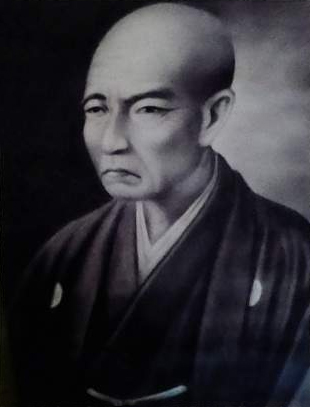
Miyamoto Musashi and the Book of Five Rings
If the Hagakure is the philosophical heart of Bushido, the 五輪書 (Go Rin No Sho, Book of Five Rings) by 宮本武蔵 (Miyamoto Musashi) is its practical sword arm.
Musashi was the most famous swordsman in Japanese history - and possibly the most famous in the world. He fought his first duel at age 13 and is said to have gone undefeated in 61 duels. He never lost. He also painted, sculpted, and wrote two martial arts treatises. He spent the last years of his life in a cave, meditating and writing the Book of Five Rings, which he completed weeks before his death in 1645.
The book's title refers to five chapters named after classical elements:
- 地 (Chi, Earth) - foundations, strategy basics
- 水 (Mizu, Water) - sword technique and tactics
- 火 (Hi, Fire) - battle and tempo
- 風 (Kaze, Wind) - analyzing other schools' weaknesses
- 空 (Ku, Void/Sky/Emptiness) - the ultimate state of the warrior's mind
That last chapter - 空 (ku, void/emptiness) - is the one Musashi considered the highest achievement. It is the mental state where the warrior acts without thought, without hesitation, without ego. The concept appears constantly in Zen Buddhism as 無心 (mushin, no-mind) - and you will recognize it in every anime moment where a fighter suddenly transcends their limits in a calm, effortless way.

Musashi himself coined the term 二天一流 (Niten Ichi-ryu, "Two heavens as one") for his dual-sword style. The name embodies his philosophy: two swords, two heavens, one unified path. This dual-wielding style became one of the most iconic images in samurai fiction.
The Book That Explained Japan to the World
Here is a fact that surprises people: the international fame of Bushido is largely due to one book written in English in 1900 by a Japanese diplomat.
新渡戸稲造 (Nitobe Inazo) was a Japanese agricultural scientist and Christian who wrote Bushido: The Soul of Japan after his Belgian wife asked him why Japan had morality without Christianity. He wrote it in English for a Western audience, and it became a bestseller. Theodore Roosevelt bought 60 copies to give to friends. It was translated into many languages and is the reason words like "Bushido" and "seppuku" appear in Western dictionaries.
Nitobe wrote the book entirely in English. He spent his career trying to explain Japanese values to Western audiences - and his framing of the seven virtues is the version that most anime and manga writers grew up with, even if they do not know the source.
The word 武士道 (Bushido) itself appears in Japanese historical texts as early as the 17th century, but it was not always used consistently. Nitobe gave it a clear structure. His seven virtues are not ancient law - they are an educator's synthesis of centuries of samurai literature. They stuck because they are accurate.
How the Code Shows Up in Anime and Games
Bushido did not end with the samurai class. It became the cultural DNA of the entire concept of the "honorable fighter" - which runs through every major anime with a sword in it.
Demon Slayer (鬼滅の刃 - Kimetsu no Yaiba)
Demon Slayer is a Bushido text dressed as shonen action. The 鬼殺隊 (Kisatsutai, Demon Slayer Corps) is a samurai organization - a private army of warriors sworn to protect civilians from supernatural enemies. Their hierarchy mirrors samurai structure:
- 柱 (Hashira, Pillar) - the nine elite warriors, equivalent to high-ranking samurai retainers
- 炎の呼吸 (Honoo no Kokyu, Flame Breathing) - the Rengoku family's inherited technique = passing down tradition through generations, exactly as samurai families passed martial arts schools (流派, ryuha) to their children
Tanjiro's 仁 (Jin, compassion) is front and center in every fight. He bows. He apologizes. He mourns his enemies. But the corps also embodies 義 (Gi, righteousness) and 忠義 (Chugi, loyalty) - their absolute dedication to the mission regardless of personal cost.
The concept of 全集中 (Zenshu Choku, Total Concentration - the breathing technique system) maps directly onto Musashi's concept of 空 (ku, void) - emptying the mind to achieve perfect physical performance.
Bleach (ブリーチ)
Soul Reapers (死神, Shinigami) are literally a samurai class with supernatural powers. Their swords - 斬魄刀 (zanpakuto, soul-cutting sword) - are named, conscious entities. The samurai relationship between warrior and weapon, where the sword had a spirit, is directly encoded here.
朽木白哉 (Kuchiki Byakuya) is Bushido in human form. He embodies 礼 (Rei, respect), 名誉 (Meiyo, honor), and 忠義 (Chugi, loyalty) to a degree that looks cruel from outside. His choice to execute Rukia despite loving her as a sister is the giri vs. ninjo conflict (義理 vs. 人情, duty vs. human feeling) that is the oldest dramatic tension in samurai literature.
The captains' haori (羽織, haori, the white-and-black cloaks) are directly modeled on samurai formal wear. Every structural element of Soul Society mirrors Edo-period samurai hierarchy.
One Piece (ワンピース) - Zoro and Wano
ロロノア・ゾロ (Roronoa Zoro) is the purest Bushido character in One Piece. His famous moment at Thriller Bark - "Nothing happened" - is 忠義 (Chugi) expressed without a single word of explanation. He chose to take his captain's suffering because that is what a retainer does. The scene would not work if you do not understand that Zoro is not just a loyal friend - he is operating from samurai code.
The ワノ国 (Wano Kuni, Land of Wano) arc makes the Bushido connection explicit. The samurai of Wano use the full vocabulary:
- 武士 (bushi, warrior) - the characters literally call themselves this
- 切腹 (seppuku) - referenced and threatened multiple times
- 恥 (haji, shame) - the driving motivation of multiple antagonists
Samurai Champloo (サムライチャンプルー)
サムライチャンプルー is the most philosophically direct Bushido anime because it sets up a deliberate contrast. Jin is Bushido - disciplined, formal, honorable, trained in a school (流派, ryuha). Mugen is the anti-Bushido - no school, no lord, no code, pure instinct and survival.
Their dynamic is the show's actual argument: does the code have value? Is form necessary for excellence? Jin survives by discipline. Mugen survives by breaking every rule. The show refuses to declare a winner because it is a real debate, not a setup with an answer.
Ghost of Tsushima (ツシマの幽霊)
Ghost of Tsushima is the most thorough examination of Bushido in any game, and possibly in any medium. The entire plot is a philosophical argument about two specific virtues:
境井仁 (Sakai Jin, Jin Sakai) starts as a pure Bushido samurai. His uncle 志村 (Lord Shimura) represents the code at its most rigid: 礼 (Rei, form and etiquette), 名誉 (Meiyo, honor), 義理 (giri, duty). Honor demands that you fight your enemy face to face, announce yourself, follow the ritual.
The Mongol invasion does not care about any of that. The only way to win is to become 幽霊 (yurei, ghost) - to use deception, assassination, tactics the code forbids.
The game's question: if following the code means your people die, and breaking the code means your people live, which is the right path? Lord Shimura chooses the code. Jin chooses the people. Neither is the villain. Both are Bushido - but applying it to a situation where two virtues conflict.
Vocabulary Callout
| Kanji | Romaji | Meaning |
|---|---|---|
| 武士道 | Bushido | Way of the warrior |
| 武士 | Bushi | Warrior, samurai |
| 侍 | Samurai | One who serves |
| 道 | Do/Michi | Way, path, life philosophy |
| 義 | Gi | Righteousness, justice |
| 勇 | Yu | Courage, bravery |
| 仁 | Jin | Benevolence, compassion |
| 礼 | Rei | Respect, etiquette |
| 誠 | Makoto | Honesty, sincerity |
| 名誉 | Meiyo | Honor, glory, reputation |
| 忠義 | Chugi | Loyalty, devotion |
| 浪人 | Ronin | Masterless samurai (wave person) |
| 葉隠 | Hagakure | Hidden among the leaves |
| 切腹 | Seppuku | Ritual suicide (belly-cutting) |
| 義理 | Giri | Duty, social obligation |
| 人情 | Ninjo | Human feeling, compassion |
| 恥 | Haji | Shame, disgrace |
| 覚悟 | Kakugo | Resolve, readiness to accept consequences |
| 無心 | Mushin | No-mind, empty mind state |
| 五輪書 | Go Rin No Sho | Book of Five Rings |
| 武道 | Budo | Martial arts (martial way) |
| 斬魄刀 | Zanpakuto | Soul-cutting sword (Bleach) |
Why This Matters for Your Japanese
Here is the practical payoff: almost every word in this article's vocabulary table is a word you will encounter in anime, and most of them carry the emotional weight they carry because of Bushido.
When a character says 覚悟 (kakugo), they are not just saying "be ready." They are invoking 400 years of samurai tradition about full commitment in the face of death. When someone calls another person 恥知らず (hajishirazu, shameless person - literally "one who does not know shame"), the insult cuts to the core of Bushido identity.
The 道 (do) character alone is worth memorizing because it transforms everything it touches. 剣道 (kendo) is not just sword sports - it is a way of living through the sword. 武道 (budo) is not just "martial arts" - it is the philosophical system that says combat is a vehicle for self-development. When you understand that 道 means "complete life philosophy," the whole genre of samurai fiction changes.
If you want to hear these words as they actually sound - in context, in song, with the emotional weight the characters feel when they say them - KitsuBeat's song library includes music from Demon Slayer, Bleach, Samurai Champloo, and other samurai-themed anime. Listening to the tracks while knowing this vocabulary changes how you process the lyrics.
And there is more in the KitsuBeat journal: from the real history behind Rurouni Kenshin to the Shinto mythology running through Naruto's jutsu system. Every article is built around the same idea - the vocabulary sticks better when you understand the world it came from.
FAQ
What is Bushido?
Bushido (武士道, literally "way of the warrior") is the code of moral conduct followed by the Japanese samurai class. It emphasizes seven core virtues: righteousness (義, Gi), courage (勇, Yu), benevolence (仁, Jin), respect (礼, Rei), honesty (誠, Makoto), honor (名誉, Meiyo), and loyalty (忠義, Chugi). The word was popularized internationally by Nitobe Inazo's 1900 book Bushido: The Soul of Japan.
What are the seven virtues of Bushido?
The seven virtues of Bushido are: Gi (義, righteousness/justice), Yu (勇, courage/bravery), Jin (仁, benevolence/compassion), Rei (礼, respect/etiquette), Makoto (誠, honesty/sincerity), Meiyo (名誉, honor/glory), and Chugi (忠義, loyalty/devotion). These were codified in the Edo period through texts like the Hagakure and popularized in the West by Nitobe Inazo's 1900 book.
What does the Hagakure say about Bushido?
The Hagakure (葉隠), written by samurai Yamamoto Tsunetomo around 1716, contains the most famous quote in samurai philosophy: Bushido to wa shinu koto to mitsuketari (武士道とは死ぬことと見つけたり), meaning "The way of the samurai is found in death." This means a samurai should live every moment as if already dead - free from fear and hesitation - not that they should seek death.
Is Tanjiro from Demon Slayer following Bushido?
Yes. Tanjiro Kamado from Demon Slayer embodies the Bushido virtue of Jin (仁, benevolence/compassion), showing mercy even toward the demons he kills. The Demon Slayer Corps itself mirrors the samurai hierarchy, with the Hashira (柱) serving as the highest-ranking warriors, equivalent to elite samurai retainers sworn to protect Japan.
Does Zoro from One Piece follow Bushido?
Zoro's entire character is built on Bushido's virtue of Chugi (忠義, loyalty). His absolute loyalty to Luffy, his oath to become the world's greatest swordsman, and his willingness to die for his captain are all classic Bushido values. The Wano arc of One Piece explicitly introduces samurai culture and Bushido as core themes.
What is the Book of Five Rings and how does it relate to Bushido?
The Book of Five Rings (五輪書, Go Rin No Sho) was written by legendary swordsman Miyamoto Musashi around 1643. It covers swordsmanship strategy and the warrior's mindset, and is one of the foundational texts of samurai philosophy. Unlike the Hagakure's focus on death and loyalty, Musashi's book emphasizes practical strategy, perception, and the mental clarity needed in combat.
How is Bushido different from other warrior codes?
Bushido is unique in combining martial excellence with philosophical virtues like benevolence and honesty. Unlike purely military codes, it emphasized how a warrior should live daily life - their manners, relationships, and personal integrity. The virtue of Jin (仁, compassion) is especially striking: a samurai who was not merciful was considered incomplete, no matter how skilled with a sword.