
The Marines That Don't Just Look Cool - They Look Like Someone
Okay but look at Aokiji closely. That lanky posture, the half-lidded eyes, the way he operates like a man who could destroy everything around him but genuinely cannot be bothered to rush. That is not a random character design. That is a specific person.
Eiichiro Oda confirmed it himself in the SBS - the fan Q&A columns printed inside the One Piece manga volumes. The three admirals are visual tributes to three giants of Japanese cinema. Their faces, their body language, their names - all of it is pulled directly from a specific era of Japanese film history: the yakuza golden age of the 1970s and 80s.
Here's the thing: once you know who these actors are, the admirals stop being just powerful characters and become something richer. Akainu's ideology makes more sense. Aokiji's tragedy has a real-world echo. And Kizaru's unsettling combination of humor and devastation suddenly feels like a very specific creative choice.
Key Takeaways
- Oda confirmed in SBS that Akainu is based on Bunta Sugawara, Aokiji on Yusaku Matsuda, and Kizaru on Kunie Tanaka
- All three actors are legends of Japanese genre cinema, particularly the yakuza (organized crime) film genre of the 1970s-80s
- Their civilian names in One Piece - Sakazuki, Kuzan, and Borsalino - are drawn from classic yakuza film characters these actors played
- Yusaku Matsuda, who inspired Aokiji, died at 40 from bladder cancer in 1989 - his legendary status in Japan as a young tragic icon mirrors Aokiji's melancholic characterization
- The Marine concept of 正義 (seigi, justice) directly echoes the yakuza code of 仁義 (jingi, honor and duty) - both are words for moral obligation that get twisted in practice
- Key vocabulary: 正義 seigi (justice), 仁義 jingi (honor and duty), 赤犬 Akainu (Red Dog), 青雉 Aokiji (Blue Pheasant), 黄猿 Kizaru (Yellow Monkey)
The side-by-side is immediately obvious once you see it. Here are the three actors in their films - you will recognize the faces:
The three admiral names are a Japanese vocabulary lesson hiding in plain sight. 赤犬 (Akainu) means Red Dog. 赤 means red, 犬 means dog. 青雉 (Aokiji) means Blue Pheasant. 青 means blue, 雉 means pheasant. 黄猿 (Kizaru) means Yellow Monkey. 黄 means yellow, 猿 means monkey. The color-animal compounds give you six kanji that appear across anime: 青空 (aozora, blue sky), 黄金 (kogane, gold), 赤い (akai, red). And 正義 (seigi, justice). Printed on every Marine coat. Means the upright moral principle: 正 (sei, correct/upright) + 義 (gi, moral principle), the same 義 in 仁義 (jingi, honor and duty), the yakuza code the admirals were built to echo.
The Film Series That Shaped an Era
To understand why Oda reached for these specific actors, you need to know the film they came from.
Jingi naki tatakai (仁義なき戦い, Jingi naki tatakai, "Battles Without Honor and Humanity") is a five-film yakuza series that changed Japanese cinema when it was released in 1973. Directed by Kinji Fukasaku, it was based on the real memoirs of a yakuza member and depicted post-war organized crime in Hiroshima with a raw, documentary-style violence that had not been seen before.
The title is the key. Jingi (仁義) means "honor and duty" - it is the old samurai and yakuza concept of moral obligation, loyalty, and the code that governs how men should treat each other. Naki (なき) means "without." The film's central argument, told across five brutal films, is that in the real world of yakuza politics, the codes of honor everyone claims to follow are abandoned the moment they become inconvenient.
Sound familiar?
Akainu pursues Absolute Justice (zettai no seigi, 絶対の正義) - a system where the goal of justice justifies every method used to achieve it. He will kill civilians, execute fugitives in their sleep, destroy islands to prevent pirates from escaping. He genuinely believes he is right. The film series that inspired his design is about men who do exactly that while calling it honor.
The word 正義 (seigi, justice) is printed on every Marine coat in the series. In the yakuza film world, 仁義 (jingi, honor) was on every gang member's lips. Different word, same function: a principle invoked to justify the unjustifiable.
Akainu - The Face of Absolute Justice
Bunta Sugawara (菅原 文太, 1933-2014) is one of the defining actors of Japanese popular cinema. His Wikipedia page has a photo - look at the jaw, the set of the eyes, the way his face carries weight without performing it. Then look at Akainu. Before anyone else, Sugawara was the face of the Battles Without Honor and Humanity series, playing the protagonist across the entire run. He had a physicality that was direct and contained - not theatrical, not explosive, but the specific kind of intensity that suggests a man who has already made the decision and is simply executing it.
That is Akainu. The Fleet Admiral does not perform his ideology. He enacts it. He does not debate whether to execute Robin or sink the Ohara island - he does it. He does not threaten to kill Whitebeard's sons - he does it. The performance Oda encoded into Akainu's design is Sugawara's screen energy: a man who is completely certain, completely committed, and does not hesitate.
The name Sakazuki (盃) - the sake cup - comes from a character in the Battles Without Honor and Humanity films. A sakazuki ceremony is how yakuza formally cemented alliances and loyalties, drinking from the same cup to symbolize brotherhood. The same ceremony that was supposed to create unbreakable bonds was constantly broken in the film series. Oda gave his vision of absolute moral authority the name of the ceremony that the films showed being violated again and again.
The color is red. 赤 (aka, red) + 犬 (inu, dog). Akainu - Red Dog. The volcanic lava that defines his fighting style, the thing that killed Ace, the thing that left a permanent scar on Luffy's chest. Red for blood, red for magma, red for the color of the man who will not stop.
Aokiji - The Coolest, Saddest Marine
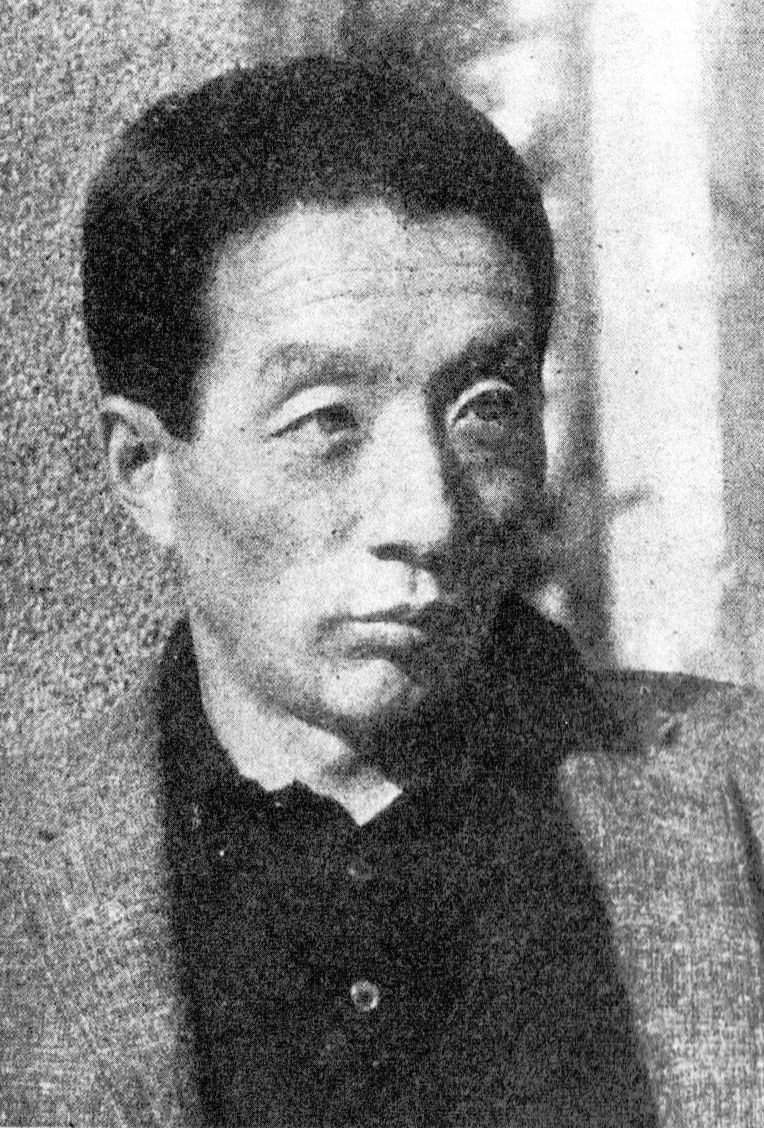
Yusaku Matsuda (松田 優作, 1949-1989) is a Japanese cultural icon in the truest sense - the kind whose influence grows after death. His Wikipedia page has a photo - the long face, the half-closed eyes, the whole energy of someone who is too cool to be trying. That is Aokiji's face. He was the lead in Tantei Monogatari (探偵物語, "Detective Story"), a series that made him a symbol of the quietly cool, perpetually cigarette-smoking detective archetype. His film roles, especially in Fukasaku productions, had a specific quality: effortless menace wrapped in laziness. He moved slowly. He spoke slowly. And then things happened very fast.
He died of bladder cancer in 1989 at age 40, while filming Ridley Scott's Black Rain in Osaka - his one Hollywood role. He knew he was dying during production and concealed it to finish the film. The entire industry mourned. His persona became permanently associated with that kind of tragic, too-cool-for-this-world energy.
Look at Aokiji. He sleeps on his ship. He cycles slowly around Marine HQ. He wears the coat loose off his shoulders like he barely agreed to put it on. He froze an entire sea and still managed to look bored about it. When he spared Robin's life against orders - when he made the choice to walk away from Absolute Justice - there was no dramatic speech. He just did it and went back to looking tired.
Kuzan - Aokiji's civilian name - is drawn from yakuza film connections just like the other admirals. The character it references fits the Matsuda archetype: someone operating within a violent system who refuses to fully commit to its logic, which makes him both dangerous and ultimately doomed within that system.
The color is blue. 青 (ao, blue) + 雉 (kiji, pheasant). Aokiji - Blue Pheasant. Ice that can freeze oceans. Blue for cold, blue for distance, blue for the color of someone who keeps the world at arm's length.
Kizaru - The One Who Smiles While Destroying Everything
Kunie Tanaka (田中 邦衛, 1932-2021) had one of the longest and most varied careers in Japanese cinema. He appeared in Fukasaku's yakuza films and in hundreds of other productions across five decades - his face was as familiar to Japanese audiences as any star, but he was a character actor, not a lead. His specialty was a particular kind of performance: surface affability concealing complete unpredictability. He could play comic, then flip to menacing, then back to cheerful, within the same scene.
That is Kizaru's entire personality. He wanders through Sabaody Archipelago complimenting the mangroves while casually vaporizing Supernovas. He chats conversationally during battles as if he is commenting on a sporting event. He is, mechanically, the most broken character in the series - the speed of light as a weapon - and Oda gave that power to someone who acts like he forgot he has it.
The name Borsalino comes from the 1970 French crime film of the same name. Borsalino is a hat - specifically, the type of hat associated with 1930s gangsters and film noir. The film starred Alain Delon and Jean-Paul Belmondo as two Marseille gangsters rising through the underworld. It is elegant, stylish, and ends in betrayal - the perfect name for the admiral whose power is simultaneously the most dazzling in the series and the most casually deployed.
The color is yellow. 黄 (ki, yellow) + 猿 (saru, monkey). Kizaru - Yellow Monkey. Light-speed laser beams. Yellow for light, yellow for the thing that moves faster than everything else, yellow for the color of someone you should be running from but who looks like he has not a care in the world.

Why These Three Actors, Why These Three Admirals
Okay but why did Oda reach specifically into 1970s yakuza cinema for his three most powerful authority figures?
Because that is the genre where Japanese storytelling worked through exactly the questions One Piece is asking.
Yakuza films from that era - especially Fukasaku's - are obsessed with the gap between proclaimed codes of honor and actual behavior. Characters invoke jingi (仁義, honor and duty) constantly, then violate it constantly. The films ask: what does it mean to serve an institution that has corrupted its own founding principles? How much loyalty do you owe a system that has stopped deserving it?
Those are the exact questions the Marine storyline is built around.
Akainu represents the institution at its most pure and most monstrous - someone who believes in the system so completely that no atrocity committed in its name can shake him. Aokiji represents someone who has seen what the institution actually is, keeps the coat on anyway, but refuses to go all the way. The conflict between them at Punk Hazard, two admirals fighting in an ice-and-lava wasteland for six months until the island was permanently split, is not just a power flex. It is the 1970s yakuza film debate rendered in One Piece physics.
The fact that both men look like actors from the films that first dramatized that debate is not an accident. Oda knew exactly what he was referencing.
Vocabulary Callout
These terms connect One Piece's Marine system to the real Japanese concepts it's drawing from:
| Kanji | Romaji | Meaning |
|---|---|---|
| 正義 | seigi | justice (printed on Marine coats) |
| 仁義 | jingi | honor and duty (the yakuza code) |
| 赤犬 | Akainu | Red Dog (Sakazuki's epithet) |
| 青雉 | Aokiji | Blue Pheasant (Kuzan's epithet) |
| 黄猿 | Kizaru | Yellow Monkey (Borsalino's epithet) |
| 提督 | teitoku | admiral, flag officer |
| 絶対 | zettai | absolute, unconditional |
| 義 | gi | duty, righteousness, justice (the second character in both 正義 and 仁義) |
The character 義 (gi) is the one that ties everything together. It appears in 正義 (seigi, justice) and in 仁義 (jingi, honor and duty). It means something like "that which is right and proper according to moral principle." In both the Marine ideology and the yakuza code, 義 is invoked as the justification for everything. The difference is whether 正 (sei, correct/upright) or 仁 (jin, benevolence/humanity) comes before it - and that difference reveals a lot about what each system actually values.
Why This Matters for Your Japanese
When you watch the Marineford arc and Akainu and Aokiji are on screen, you are watching a specific argument about institutional loyalty that Japanese storytelling has been having since the 1970s. When Oda puts 正義 on a Marine coat, he is evoking an entire genre's worth of stories about what happens when the people claiming to enforce justice are the most dangerous ones in the room.
This kind of layered meaning shows up constantly in anime and the music that comes with it - in the kanji of attack names, in the words of opening themes, in the vocabulary that characters use when they are talking about honor, loyalty, and who gets to define what is right.
KitsuBeat lessons are built around songs where this vocabulary comes alive - not in isolation, but in the emotional context of the stories that gave the words their charge. Explore the song library and look for the justice and honor vocabulary in tracks from One Piece and beyond.
The same process of Oda reaching into Japanese cultural history for his character designs runs through the Uchiha clan in Naruto too - every Mangekyou Sharingan technique is named after a god from Japan's oldest religious text. Read: Why Are Uchiha Jutsus Named After Japanese Gods?
More articles on the language and lore encoded into anime and games are in the Journal.
FAQ
Are One Piece's admirals based on real actors?
Yes. Eiichiro Oda confirmed in the SBS (fan Q&A) sections of the One Piece manga volumes that the three admirals are visually modeled after three legendary Japanese actors: Akainu (Sakazuki) is based on Bunta Sugawara, Aokiji (Kuzan) is based on Yusaku Matsuda, and Kizaru (Borsalino) is based on Kunie Tanaka.
Who is Akainu based on in real life?
Akainu (whose real name in the series is Sakazuki) is visually modeled after Bunta Sugawara, a legendary Japanese actor best known for the Battles Without Honor and Humanity (Jingi naki tatakai) yakuza film series from the 1970s. Sugawara's intensity and hard-edged screen persona directly informed Akainu's uncompromising Absolute Justice ideology.
Who is Aokiji based on in real life?
Aokiji (Kuzan) is visually modeled after Yusaku Matsuda, one of Japan's most iconic actors of the 1970s-80s. Matsuda was famous for his cool, effortlessly stylish screen presence and his role in the detective drama Tantei Monogatari. He died of bladder cancer in 1989 at age 40, making him a legendary and somewhat tragic figure in Japanese pop culture - a quality that resonates in Aokiji's melancholic, reluctant-Marine characterization.
Who is Kizaru based on in real life?
Kizaru (Borsalino) is visually modeled after Kunie Tanaka, a prolific Japanese character actor known for appearing in Kinji Fukasaku's yakuza films and many other productions. Tanaka often played roles that mixed menace with a deceptively relaxed surface - exactly the energy Kizaru projects: seemingly carefree and unhurried, but capable of absolute devastation.
What does Seigi mean in One Piece and why is it on the Marine coats?
Seigi (正義) means "justice" and it is the word printed on the back of every Marine coat in One Piece. It is not decorative - it represents the Marines' self-image as the enforcers of justice in the world. The tension in the story is that different admirals interpret seigi differently: Akainu pursues Absolute Justice (where the ends justify the means), Aokiji practiced a more humane Lazy Justice, and the debate between them mirrors the moral complexity found in the yakuza films that inspired their designs.
What is Jingi naki tatakai and why does it matter for One Piece?
Jingi naki tatakai (仁義なき戦い, Battles Without Honor and Humanity) is a landmark 1973 Japanese yakuza film series directed by Kinji Fukasaku. It starred Bunta Sugawara and Kunie Tanaka, two of the three actors who visually inspired One Piece's admirals. The film series is famous for its moral ambiguity - characters fighting under the banner of jingi (honor and duty) while doing deeply dishonorable things. This same tension between proclaimed justice and brutal means runs directly through Akainu's character.
What do Akainu, Aokiji, and Kizaru mean in Japanese?
These are the admirals' code names (epithets) rather than their real names. Akainu (赤犬) means Red Dog, Aokiji (青雉) means Blue Pheasant, and Kizaru (黄猿) means Yellow Monkey. The color pattern - red, blue, yellow - mirrors the three primary colors and signals their roles as the three pillars of Marine power in the One Piece world.